Gir National Park, Gujarat
Area of the park : 1412 sq km
Year of Establishment: 1965
Best season to visit: The best time to visit Gir is between December and March
Please provide us your contact number and convenient time, our expert will call back to you.
The Gir Forest National Park and Wildlife Sanctuary, also known as Sasan Gir, is a forest-cum-sanctuary in the Indian state of Gujarat famous for being the only abode of the Asiatic Lion. It was however not long ago that this majestic creature, which now is the prime attraction of the park, was on a death-bed counting its days as its population shrank to a record low, prompting the park authorities to chalk out a master strategy to reverse the trend. The efforts bore fruit and today, according to a Lion Census of 2010, there are 411 lions in Gir, a stunning reversal of fortunes for the Asiatic Lion.
The forested hilly terrains of the park have also helped many other species like jackals, leopards, antelope, and deer to thrive, making it the perfect destination to sight these incredible creatures in their natural habitat. Considering the number of wild species that are residents of the park, many of which are rare and endangered species, the park is widely regarded as one of the most important protected areas in Asia.
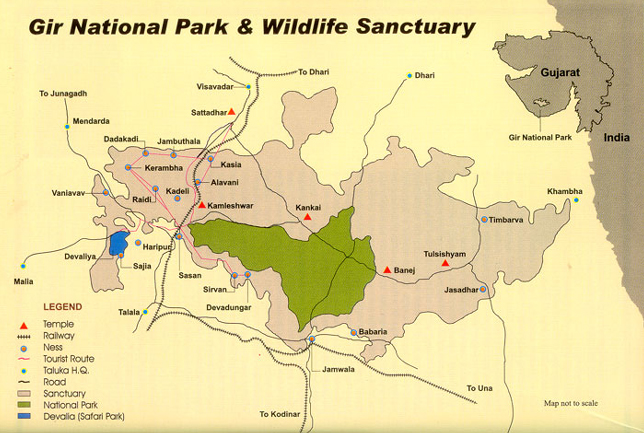
The core zone of the park, which spreads over an area of 258 sq km, became a national park in 1975. The park also includes a sanctuary with an area of 1153 sq km.
Geography of the park
The wildlife of the park is nurtured by no less than seven major perennial rivers that crisscross the park, viz., Hiran, Shetrunji, Datardi, Shingoda, Machhundri, Godavari and Raval. Four dams which act as reservoirs have been built in the park to ensure that the animals have easy access to water; these dams are also deemed necessary for the flora of the park which in turn sustains the wildlife. The biggest of the four dams is the Kamleshwar Dam, which many regard to be the lifeline of the park.
When winter is at its peak, the surface water of the park goes up and is available at about 300 water points. But if there is a drought, many water bodies, especially the smaller ones, dry up. As a result, it is pretty common to spot different animal species queuing up at the remaining water bodies to quench their thirst. This then turns out to be an opportune time for predators like the lion, jackals and his ilk who are expert opportunists. In case there is a severe water scarcity in any particular region of the park, the park authorities immediately jump into action to forestall any loss of lives.
Location
The park is located in the south west of Gujarat at a distance 360 km from Ahmedabad and 40 km from Veraval. Sasan Gir village is the entrance of the park and hosts the park reception and the orientation center.
Flora
The flora of Gir is rich and diverse, which in a way is essential for supporting the wide variety of wildlife found in the park. The landscape is dominated by mixed deciduous forests along with semi-evergreen and evergreen trees, and scrub jungle. There are also large expanses of grasslands and rocky hills that one will find here. As the forest is of dry deciduous nature, the climate remains dry for the major part of the year and supports scrubs like Babul and dry-deciduous which are found in good numbers. Also, as is the case with this type of climate, when one moves up the hills, the trees get shorter and their density more sparse.
The common trees that are found here include Teak, Flame of the forest, Acacia, Banyan, Zizyphas, Jamun, Tendu and Dhak. In fact, Teak covers half the total vegetation area of the park.
Among the plant species, many of them broad-leaved trees, Jambu, Karanj, Umro, Vad, Kalam, Charal, Sirus and Amli are the prominent ones and are responsible for maintaining the moisture content of the park. In recent times, with an eye on increasing the forested area of the park, Prosopis and Casuarina have been planted in the coastal areas close to Gir.
Firmly establishing its position as an important biological research area that contributes considerably towards the progress of education, scientific endeavor, and recreation, Gir today produces around 5 million of green grasses every year, which translates into approximately Rs. 500 million, through annual harvesting.
 Restaurant
 Internet Service
 Tea/Coffe Machine
 Business Centre
 Swimming pool
 Travel Desk
 Doctor on Call
 Baby Sitting
 Health club
  Bar
Bar Safe Deposit
 Amphitheatre
 Library
 Std/Isd
  Money Exchange
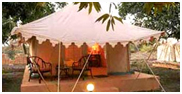
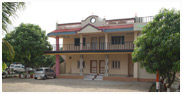

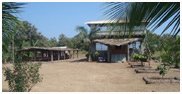
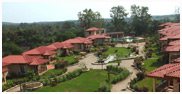

Gir National Park Tour Packages-1
| Tour Name | Lions of Gir Tour |
| Duration | 06 nights & 07 days |
| Destinations Covered | Delhi - Ahmedabad - Bhavnagar - Gir - Zainabad - Ahmedabad - Delhi or Mumbai |
Gir National Park Tour Packages-2
| Tour Name | Gir National Park Weekend Package |
| Duration | 02 nights & 03 days |
| Destinations Covered | Delhi - Gir National Park - Delhi |
Gir National Park Tour Packages-3
| Tour Name | Gujarat Bird Watching Tour |
| Duration | 09 nights & 10 days |
| Destinations Covered | Delhi - Ahemdabad - Dasada - Jamnagar - Gir National Park - Gir - Bhavnagar - Velavadar - Ahemdabad - Delhi |
Wildlife in Gir National Park
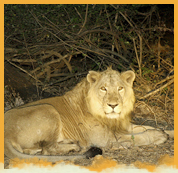 Occupying the same space as the Asiatic Lion can be hard for the other species of the park, for they may be overlooked. Outshining the Asiatic Lion is no mean task who in its characteristic mane and with a fierce reputation to boot is truly the king of the jungle. So, these animals can't help but play second fiddle to the Asiatic Lion. According to a recent census, Gir has 411 lions, of which 97 are male, 162 female and the remaining 152 cubs.
Other animals trying to take the limelight away from the Asiatic Lion.
There are many other animals in the park that are no less interesting, but only if you are ready to look beyond the mighty Asiatic Lion. The park has a large number of leopards, which together with the lions gives it the unique distinction of being the park with the highest concentration of big-cats in India. The chousingha, which is the world's only four-horned antelope, is another animal that comes close to hijacking the Asiatic Lion's claim to fame. A significant number of footfalls at the park can also be attributed to mammals like Sambar and spotted deer (chital), blue bull (nilgai), chinkara (Indian gazelle) and wild boar thrive in Gir. Jackal, striped hyena, jungle cat, rusty-spotted cat, langur, porcupine, and black-naped Indian hare.
Among the reptile family, the marsh crocodile or mugger as it is popularly known in the region is the one to look out for; the Monitor Lizard is another species that deserve some attention. A total of 40 species of reptiles and amphibians has been recorded so far in the park. As for snakes, they are present almost everywhere from tree tops to bushes to swamps. Huge pythons can be seen lazing away along the banks of river bodies.
Avifauna of the park
The avifauna of the park is highlighted by the presence of 300 species of birds, many of which are native to the region. Then there are others like the endangered lesser florican and the Saras crane, which are predominantly found inhabiting the grasslands that lie along the periphery of the park. Species like the painted sandgrouse, grey francolin, quails, Asian paradise flycatcher, black-naped monarch, white-browed fantail, Asian brown flycatcher, gray-headed flycatcher, verditer flycatcher, Tickell's blue flycatcher, greenish warbler, white-eye, Coppersmith Barbet, common and marshal's iora, Rufous treepie, yellow-footed green pigeon are, however, more common and can be easily spotted at different places in the park.
Travel Information about Gir National Park
How to reach Gir National Park
Gir is well connected by all the three modes of transport -road, railway and air. So, reaching girl shouldn't be much of a trouble for travelers. Junagadh, the headquarters of Junagadh district in the state of Gujarat, is the common entrance route to the park.
By Air : The nearest airport is Keshod Airport in Junagadh, but it is currently not in operation. So, the best thing to do is to book a flight to Rajkot, which is 105 km from Junagadh. It normally takes around two and a half hours from Rajot to reach Junagadh by bus.
By Rail : The Junagadh train station, which is closest to the park, is well connected to all the important destinations in the state, including Ahmedabad and Rajkot. From Junagadh, it is barely a one and a half hour journey by road to Gir.
By Road : State transport buses ply regularly from Junagadh and Veraval, which are approx 50 km and 40 km respectively away from the park, to Susan Gir at least four times a day. If one is travelling from some other place in Gujarat, even then reaching the park is pretty straight forward as there are multiple options in the form of private buses and state transport that one can choose from.
Gir National Park Map