


Sasan Gir Wildlife Sanctuary, Gujarat
Location: 64 km from Junagadh and 32 km from Verawal
Total Coverage Area:1,412.14 sq. km./ Lion sanctuary 141,213 hectares (of which national park 35,948 hectares).
Please provide us your contact number and convenient time, our expert will call back to you.
About Sansan Gir Wildlife Sanctuary
The Gir National Park, was established on 18th September, 1965, as a Forest Reserve, primarily to conserve the Asiatic lion. The total area under national park status is about 2,450 hectares. It is located in the Junagadh District of Gujarat, about 65 km south-east of Junagadh city, and 90 km east of Keshod Airport, in the Kathiawar (Saurashtra) Peninsula. Sasan, with a forest rest-house, is the headquarters of the sanctuary.The Gir is a mixed deciduous type of forest with teak, ber, flame of the forest, jamun, a variety of acacia, particularly babul. It is a hilly tract with plenty of rivers, and offers the visitor long pleasant drives, through the thick forest cover.
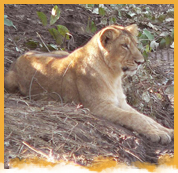 Gir National Park is the only remaining habitat of the Asiatic lion, which has been confined to this forest, since 1884 ( about 239 lions were reported in 1985 ).The Asiatic lion is slightly smaller than its African cousin, nevertheless, a large male lion of the Gir is quite a sight to behold. The best way to observe the big cats is, of course, in their natural surroundings, at dawn and dusk, when they are on the prowl. The Forest Department does arrange lion shows every Sunday, where the spectators can watch prides of lions on the hunt.There are guided trips available, to watch these magnificent animals from a very close range.
The chinkara, wild boar, striped hyena, jackal, common langur, porcupine, hare, black buck, are the other animals, that can be found in this sanctuary. There are over 200 bird species including the peafowl, grey partridge, Bonelli's eagle, crested serpent eagle, jungle bush quail, painted sandgrouse, common green pigeon and several species of doves . The Gir is also home to the marsh crocodile, which can be sighted easily in its rivers, particularly in the lake of the Kamaleshwar dam. There is also a crocodile breeding farm at Sasan.
The Gir National Park is steeped in history and folklore. It boasts of temples of great antiquity, like Kankai Mata and Tulsishyam, a place of pilgrimage with hot springs. The forest is famous for its cattle herders, the Madharis, whose buffaloes form a substantial part of the lions' meals. Extremely hospitable, the Madharis are herders, whose lifestyle has changed little over the years, and their folklore and traditions are a unique record of coexistence of humans with lions.
Wildlife viewing in the Girs is best done, by driving around the forest. The best drives from Sasan are, to Baval Chowk and Kankai, to Chodavdi and Tulsishyam, and to Kamaleshwar dam. Though a sturdy car would do, a jeep is definitely more appropriate.
Three unusual reserves, the Nalsarovar Lake and Sanctuary - home to several water-birds, the Little Rann of Kutch - home of the Indian wild ass, and the fascinating Flamingo Island, render the state of Gujarat a virtual haven for wildlife buffs.
The Topography
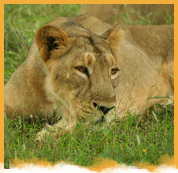 The state of Gujarat has some splendid wildlife reserves that are quite out of the ordinary. The Gir National Park is the only home in India of the Asiatic Lion of which there are nearly 300 in the park. This sanctuary lies in the Gujarat peninsula in South West India and is gifted with a terrain that is rugged with low hills and the vegetation is full of mixed deciduous, with stands of Teak, Acacia, Jamun, Tendu and Dhak trees, interspersed with large patches of grasslands. On the hills of the trees are sparse and stunted.
Climate
From the three common seasons of summer, winter and monsoon, summer takes the longest stretch, in which the average minimum and maximum temperature ranges between 10ºC to nearly 45ºC. The hottest months recorded in Gir are April and May. The rains bring some relief from the heat during the monsoons period of, starting from middle of June and September. The maximum recorded during this period in the area is around 1,866 mm and the minimum recorded being 199mm.
Because of less rainfall water always remains a critical factor in the well being of the forest. At times the waterholes are required to be replenished through water tankers from outside and the park staff maintains around 350 of such waterholes.
The Lion King
Gir Sanctuary is the last and only home of the critically endangered Asiatic Lion. These lions are a smaller more compact version of their African version, and are best viewed at dawn or dusk when they are on the move. The major difference between the two is that the African Lion appears larger than the Indian Lion because of its large and luxuriant mane.
Extension of The Sanctuary
In the past Gir had a much bigger coverage area. After Indian government placed a total ban on killing of Lions in 1955, within the time span of three years the area estimation came around 2,560-sq-km and the Lion population was estimated at 287. Since then, the forest area very quickly got reduced in area to 1,452-sq-km. In 1965, the Gujarat government declared Gir forest as a sanctuary and in 1975; part of the sanctuary was declared as a National Park. And with the success of the protection program there is an incredible increase in the Lion population too, from 177 in 1974 to around 300 in 1995.
The main territories of this territorial predator outside Gir in Gujarat include Nagwa Beach in Diu, Sutrapada, Palitana, Mahuva, Savarkundla, Mitiyala, Keshod, Maliya Hatina, and Girnar.
Hotels & Resorts in Sasangir Wildlife Sanctuary
|
||||||||||||||||||||
 Business Centre
 Swimming pool
 Health club
 | The Gir Lodge | |
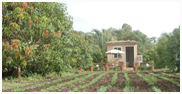 |
Located on the edge of the world-renowned Gir Forest, the gir lodge provides spacious comfort and modern amenities. Natures lovers and anyone with an appreciation for wildlife are sure to fall in love . |
          |
|
| Maneland Jungle Lodge | |
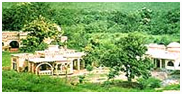 |
Maneland Jungle Lodge is designed to match the asthetics of the area & stylized using local material & construction techniques. The lodge nestling in small hills offers a perfect blend of the wild, exciting & even romantic experience. |
 |
|
| Gir Birding Lodge | |
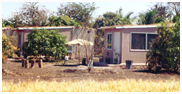 |
The Gir Birding Lodge is located in a large mango orchard at the entrance to the Gir Wildlife Sanctuary. The lodge has two rooms in the main building (sharing a bath) and 4 cottages with attached bathrooms, featuring western toilet fittings. |
 |
|
| Lion Safari Camp | |
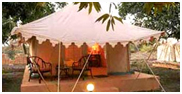 |
The Lion Safari Camp is a new luxury jungle safari camp at the famous Gir National Park - the last remaining bastion of the Asiatic Lion. It is the first Luxury Jungle Safari Camp of its kind in Gir National Park. |
|
|
| Sinh Sadan Guest House | |
 |
|
|
|
Sasan Gir Wildlife Sanctuary Tour Packages
Sasan Gir Wildlife Sanctuary Tour Packages-1
| Tour Name | Lions of Gir Tour |
| Duration | 06 nights & 07 days |
| Destinations Covered | Delhi - Ahmedabad - Bhavnagar - Gir - Zainabad - Ahmedabad - Delhi or Mumbai |
Sasan Gir Wildlife Sanctuary Tour Packages-2
| Tour Name | Gir National Park Weekend Package |
| Duration | 02 nights & 03 days |
| Destinations Covered | Delhi - Gir National Park - Delhi |
Sasan Gir Wildlife Sanctuary Tour Packages-3
| Tour Name | Gujarat Bird Watching Tour |
| Duration | 09 nights & 10 days |
| Destinations Covered | Delhi - Ahemdabad - Dasada - Jamnagar - Gir National Park - Gir - Bhavnagar - Velavadar - Ahemdabad - Delhi |
Wildlife in Sasan Gir Wildlife Sanctuary
Sasan Gir Wildlife Sanctuary is the only home for Asiatic lion which is specific to this forest only. There were approximately 239 lions. There are other animals also that can be seen in the sanctuary chinkara, wild boar, striped hyena, jackal, common langur, porcupine, hare, black buck. There are more than 200 different types of bird here which have peafowl, grey partridge, Bonelli's eagle, crested serpent eagle, jungle bush quail, painted sandgrouse, common green pigeon and several species of doves. On the river sides one can easily take a look at marsh crocodile. Mainly in the lake of Kamaleshwar dam which is home place for these crocodiles. The sanctuary also includes a crocodile breeding farm.
Sasan Gir Wildlife Sanctuary Travel Information
Gerneral Information
Location : Junagadh, Gujarat, India.
Nearest city : Junagadh
Area : 1,412 km²
Established : 1965
Time to Visit : Novomber to June
Safari Timing Morning : 0700 to 1100 Hrs, Afternoon: 1500 Hrs to 1700 Hrs
How to Reach Sasan Gir Wildlife Sanctuary
From DelhiBy Air : The nearest airport with connectivity to Delhi is Ahmedabad about 390 km from the lodge and the drive takes about seven to eight hours depending on the number of stops en route.
By Train : There are trains to Rajkot and then the drive of about 164 km takes three to four hours.
From Mumbai : Mumbai has direct flights to Diu Airport, about 112 km from the national park, and both flights and trains to Rajkot, 164 km from the Gir National park.
From Ahmedabad There are trains to Junagadh, 60 km from Gir, or Veraval, 40 km from Gir, and the drive takes about one hour from either. There are also trains and buses to Sasan, near the lodge, from Junagadh / Veraval.


