


Birding Tour in Kaziranga
Guwahati - Kaziranga National Park - Nameri National Park - Shilong - Guwahati
Day 1: Guwahati to Kaziranga National Park
Day 2: AM Elephant Ride // Central Range PM Western Range
Kaziranga National Park is a highly reputed wildlife protected area. It is the largest undisturbed representative area of Brahmaputra, its flood plain, grassland and forest. Reputed to be a mini Africa in the Indian sub-continent, the Park has more than 70% of the world's one-horned rhino population, 70% of the world population of the Eastern Swamp Deer (Cervus duvuaceli ranjitsinhii) and 75% of the world's wild Asiatic water buffalo. It has a significant population of the Asian Elephant. The Park has more than 483 species of birds, 23 of them are globally threatened species. Because of the varied habitat-types that the Park comprises of as also of the strict protection accorded to them birding in Kaziranga is very special. The Eastern Range is good for water birds such as Falcated Teal, White-eyed Pochard and Spot-billed pelican (a colony of c 200 pairs is located in this range). For grassland birds the Western Range is ideal. The Bengal Florican can be seen during the elephant ride in the Central Range. The nearby Panbari Reserved Forest is good for primates such as Hoollock Gibbon and Capped Langur and also woodland birds such as Yellow-vented Warbler, Great Hornbill, Darknecked Tailorbird, Grey-bellied and Slaty-bellied Tesias. Tea Gardens nearby are ideal for Laughingthrushes (4 spp) White-cheeked Partridge, Daurian Redstart, White-browed Scimitar Babbler, etc. Other interesting birds include Green-backed Heron, Changeable Hawk-Eagle, Pied and Northern Harriers, Lesser and greater Adjutants, Black-necked Storks, Grey-headed and Pallas's Fish-eagle (common), Swamp Francolin (common), Black-bellied Tern, Finn's Weaver, Slender-billed Babbler (rare), Grey-headed Lapwing, Black-bellied tern, Black-breasted Thrush, Yellow-naped Woodpecker, etc.
Day 3: AM Tea Gardens
Eastern Range (whole day - come out of Park for lunch)
Day 4: AM Panbari // PM Central Range
Day 5: Kaziranga - according to choice // leisure
Day 6: Kaziranga to Nameri National Park
The habitat is diverse more close to Manas National Park (which is now closed). Sighting of wild animals is difficult but the place has 370 species of birds. Known to be a good place to sight the White-winged Wood Duck, pax can view Ibisbill (uncommon), Ruddy Kingfisher, Wreathed hornbill, Long-billed Ringed Plover, Sultan Tit, and Yellow-bellied and White-throated Fantails. Birding will be concentrated on species that winter in the East Himalayan foothills.
Day 7: Nameri National Park:
birding inside the park on foot
Day 8: Nameri :
birding along the Jia Bhorelli River (rafting)
Day 9: Nameri to Shillong
Day 10: Birding at Shillong Peak - look for Tawny-breasted Wren Babbler and other northeast Indian hills state species such as Crested Finchbill, Rustycapped Fulvetta, Striated Bulbul, etc.
Day 11:
AM Birding at Mawphlang Leave for Cherrapunjee at about 11hrs00 in order to look for Dark-rumped Swift
Day 12:
Shillong to Guwahati (AM birding along Old Shillong - Guwahati Road // Visit Ulubari Market to see Greater Adjutant Stork)
Day 13: Fly out
Tour and Services End

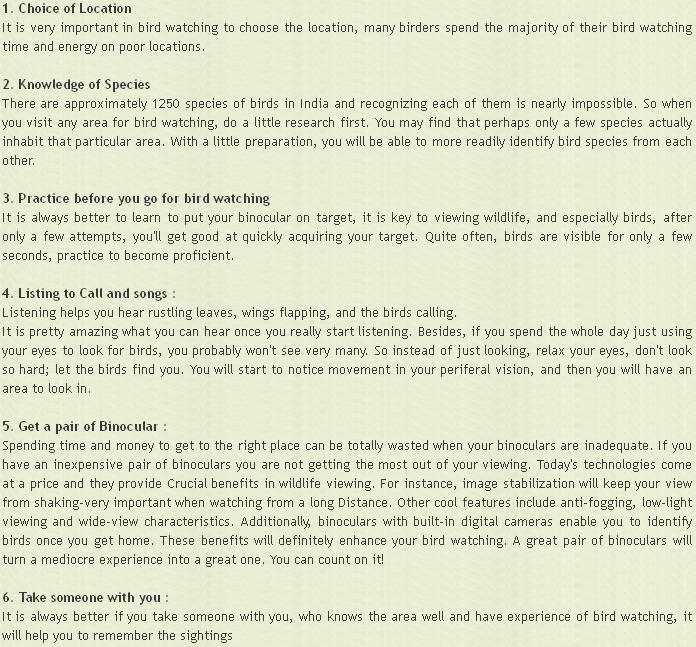
Bird Watching Tips
Birding Tour in Kaziranga (Tour Highlight)
| City | Tour Highlight |
| Kaziranga National Park | Birding in by Elephant ride in Central Range, western Range, and panbari, we can see Green-backed Heron, Changeable Hawk-Eagle, Pied and Northern Harriers, Lesser and greater Adjutants, Black-necked Storks, Grey-headed and Pallas’s Fish-eagle (common), Swamp Francolin (common), Black-bellied Tern, Finn’s Weaver, Slender-billed Babbler (rare), Grey-headed Lapwing, Black-bellied tern, Black-breasted Thrush, Yellow-naped Woodpecker. |
| Nameri National Park | Birding by foot, birding along the Jia Bhorelli River (rafting). |
| Shillong | Birding at Shillong Peak, we can see Tawny-breasted Wren Babbler and other northeast Indian hills state species such as Crested Finchbill, Rustycapped Fulvetta, Striated Bulbul. Birding at Mawphlang. |
Get a Call Back from us
Please provide us your contact number and convenient time, our expert will call back to you.


