


Gibbon and Tiger Watching Tour
Kolkata/Delhi - Guwahati- Nameri National Park - Jorhat- Gibbon Wildlife Sanctuary - Kaziranga National Park - Guwahati- Manas National Park - Guwahati - Delhi
Day 01: Arrival at Kolkata/Delhi
Arrival at Kolkata (land of Joy)/New Delhi. Received upon arrival and transferred to hotel. Day free at your, leisure. Evening, free. Overnight in Hotel.
Day 02: Full day sightseeing
Sightseeing the boulevards of the erstwhile British capital which still carries the reminiscence of the days of Raj in India. Overnight in Hotel.
Day 03: Kolkata/Delhi- Guwahati
Morning drive to the airport for flight to Guwahati (gateway to North East, India). Received upon arrival and transferred to hotel. Day free at your, leisure. Evening, sunset cruise on river Bramhaputra. Overnight in hotel.
Day 04: Nameri National Park
In the morning we will drive down through the turning & twisted roads amidst the forest stretches to Nameri National Park (km), the youngest National Park of Assam. Situated in Sonitpur district of Assam and the home of four rare wild cats. Night stay will be at the eco camp inside the park.
Day 05: Nameri National Park
Early morning nature walk inside the National Park after breakfast Return for a picnic lunch by the riverside. Raft down river Jia Bhorali. Return to camp for overnight stay.
Day 06: Jorhat
After leisurely morning activity drive to Tea Bunglow at Jorhat, enroute visit the oldest Tea Research & Training Institute, evening enjoy a life quite different from the normal, a feeling of life like old British Tea Planters. A refreshing mood with tea garden workers performing traditional JHUMUR Dance. Overnight in the Bunglow.
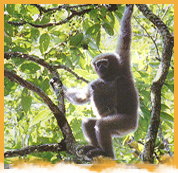 Gibbon Wildlife Sanctuary: It is the only wildlife Sanctuary named after a non-human primate. The evergreen nature of the forest has made it ideal home for the primates. Out of 15 species of primates found in India, 7 species are found in Gibbon Wildlife Sanctuary.
Day 07: Jorhat - Gibbon Wildlife Sanctuary
Early morning visit the Gibbon Wildlife Sanctuary, the only sanctuary in India to be named after a non-human primate.
Day 08: Kaziranga National Park
Post breakfast drive to Kaziranga National Park, and check into lodge/resort, inside the park. Afternoon, enjoy the beauty and calmness inside a national park. Overnight inside the National Park.
Day 09: Kaziranga National Park
Early morning Elephant safari in the core area of the national park followed by full day jeep safari in the two major ends of the park to see migratory birds and the animals. Evening enjoy the flavour of the local Bihu dance performed by the local villagers. Overnight inside the National Park.
Day 10: Guwahati
Drive back to Guwahati and check into hotel. Evening free. Overnight in Hotel.
Manas National Park: It is the only World Heritage Site declared by UNESCO in amongst national parks in North East India in 1985. With its unique bio-diversity and magnificent landscape it was included in the list of tiger reserve under Project Tiger in 1973. The entire national park covers an area of around 2850 sq. km extending from river Sankosh in the west to Dhansiri in the east with a core area covering upto 500 sq. km. Manas was declared National Park in the year 1990. The presence of rivers like Manas and Beki adds charm and beauty to the National Park. The park has 543 species of plants, 60 species of mammals and 312 species of Avi-fauna.
Day 11: Manas National Park
In the morning drive to Manas National Park, situated in the foothills of Bhutan Himalayas. The entire national park falls under Tiger Reserve Project and is a land of perfect bio-diversity. On arrival check into lodge inside the park. Overnight in the lodge.
Day 12: Manas National Park
Entire day enjoy the Jeep Safari inside the National Park. Evening enjoy the charm of local tribal dance. Overnight in the lodge.
Day 13: Manas National Park
Enjoy an unique boat ride on river Manas starting from Mothanguri and ending at Bispani this entire route of 35km will encounter you with animals such as wild buffalo, deer and elephant herd. Afternoon enjoy nature walk upto the bank of river Manas followed by deep forest walk where Golden Langur and Capped Langur can be seen. Overnight in the lodge.
Day 14: Guwahati
Early morning drive back to Guwahati enroute visit Saulkuchi the traditional Muga silk village of Assam, spent some of your time near the looming machine and experience, the rich heritage of Muga Silk craft. Overnight in hotel.
Day 15: Transfer to Guwahati Airport/Railway Station
Morning transfer to Guwahati Airport/Railway Station for onward Journey.
Tour and Services Ends.

Gibbon and Tiger Watching Tour (Tour Highlight )
| City | Tour Highlight |
| Delhi / Kolkata | Jama Masjid, Red Fort, Raj Ghat, India Gate, President House, Parliament house, Qutub Minar. |
Victoria Memorial, Indian Museum, Eden Garden, Maidan and Fort William, Ochterlony Monuments, St Paul's Cathedral. |
|
| Guwahati | Sunset cruise on river Brahmputra. |
| Nameri National Park | Morning Nature walk inside the National Park, Rafting on Jia Bhorolee, we can see White-winged Wood Duck, pax can view Ibisbill (uncommon), Ruddy Kingfisher, Wreathed hornbill, Long-billed Ringed Plover, Sultan Tit, and Yellow-bellied and White-throated Fantails. |
| Jorhat | Tea Bunglow, The Oldest tea research and training Institute, traditional JHUMUR dance. |
| Gibbon Wildlife Sanctuary | We can see Hornbill, Racket-tailed Drongo, Parakeets, Doves, Pegions, Owl, Eagles, Kite, Treepie, Flower peaker, Fly catcher, Kaleej pheasant, Red jungle fowl, Crow pheasant etc. |
| Kaziranga National Park | Elephant Safari in the National Park, White-cheeked Partridge, Daurian Redstart, White-browed Scimitar Babbler, Green-backed Heron, Changeable Hawk-Eagle, Pied and Northern Harriers, Lesser and greater Adjutants, Black-necked Storks, Grey-headed and Pallas's Fish-eagle (common), Swamp Francolin (common), Black-bellied Tern, Finn's Weaver, Slender-billed Babbler (rare), Grey-headed Lapwing, Black-bellied tern, Black-breasted Thrush, Yellow-naped Woodpecker, etc. |
| Manas National Park | Jeep Safari in the National Park, Greater Adjutant, Black-tailed Crake, Red-headed Trogon, Swamp Francolin, Wreathed and Rufous-necked Hornbill, Marsh and Jerdon's Babblers, Pied Harrier, Rufous-rumped and Bristled Grassbirds, Hodgson's Bushchat, Rufous-vented Laughingthrush, Finn's Weaver, Ibisbill. |
Tiger Spotting Tips

Get a Call Back from us
Please provide us your contact number and convenient time, our expert will call back to you.


