


Valley of Flowers Tour
Delhi - Haridwar - Joshimath - Govind Ghat - Ghangria - Valley of Flowers - Ghangari - Hemkund Sahib - Joshimath - Rishikesh - Haridwar - Delhi
Valley of Flower: The beautiful valley situated at an altitude of 3300 to 3650 mts is the 'paradise' of nature lovers. Starting from about 6 kms from Bhuindhar village it covers an area of about 87 square kms. The valley is exceptionally rich of the flowers wealth and has the largest collection of wild flowers species. The river Pushpawati flows through the verdant valley. The valley blooms with exotic. Flower from June, July till September. There are about 520 species of flowering plants and the area was declared as a National Park in 1982. The animal like Himalayan black beers, musk deer's, brown beers, Bharal and rich variety of birds and butter flies are found in this national Park.
Day 01: New Delhi - Haridwar (205 kms/5-6 hrs)
In the morning take an AC Train for Haridwar at 06:55 hrs. Upon arrival at Haridwar transfer to hotel and check in. In the evening visit "Har Ki Peri" for Aarti ceremony. Back to hotel for dinner and overnight stay.
Haridwar: Haridwar is the gateway to the four pilgrimages of Uttaranchal. It's also starting point on the journey to the sacred sources of the Ganga and the Yamuna Rivers. According to legend, Prince Bhagirath performed penance here to salvage the souls of his ancestors who had perished due to Sage Kapila's curse. The penance was answered and the river Ganga trickled forth from Lord Shiva's locks and its bountiful water revived the sons of King Sagara. In the tradition of Bhagirath, devout Hindus stand in the sacred waters here, praying for the salvation of their ancestors.
The holy city of Haridwar is home to some of the most sacred Hindu rituals. Round the year, devotees from all over the country flock here in their thousands to perform "Poojas" or prayers. Renowned for the "Maha Kumbh Mela" which appears Every 12 years and the enchanting "Aarti" at "Har Ki Pauri" which captives the beholder with hundreds of burning wick lamps floating down the Ganges this town has been distinguished for centuries in the Indian society.
Day 02: Haridwar - Joshimath (245 kms/8-9 hrs)
After an early breakfast drive to Joshimath via Devprayag. On the way visit Dev Prayag where Bhagirathi and Alaknanda rivers meet. From here the holy river Ganges started. Arrival at Joshimath by evening, check into the hotel. Dinner & overnight stay.
Joshimath: The religious centre, established by Adi Shankaracharya, which he called Jyotirmath, later came to be known as Joshimath. Among the sites of interest are the temples of Nav Durga and Narsingh. Apart from its obvious religious importance, Joshimath is known for its scenic beauty.
Day 03: Joshimath - Govind Ghat (22 kms/1 hrs) - Ghangria (14 kms/3-4 hrs)
After an early breakfast drive to Govind Ghat. Which is the starting point of the trek? From Govind Ghat there is a gradual ascent along a well maintained pilgrim trail to Ghangria. Upon arrival at Ghangria check into hotel. Explore the surroundings in the evening. Dinner and overnight stay at the hotel.
Day 04: Ghangria - Valley Of Flowers - Ghangria (5 kms one side/4-5 hrs)
After breakfast trek to Valley Of Flowers (3858 m) from Ghangria. The valley is an enchanting sight with an impressive array of rare wildflowers like Geranium, Marsh marigold, Primulas, Potentilla, Geum, Asters, Lilium, Ranunculus, Corydalis, Inula, Braham kamal, Campanula, Pedicularis, Arisaema, Morina, Impatiens, Bistorta, Ligularia, Anaphalis, Saxifrages, Sibbaldia, Thermo- psis, Trollius, Codonopsis, Dactylorhiza, Cypripedium, Strawberry, Epilobium, Rhododendrons and numerous others. Most of the flowers have medicinal values too. The valley is 10 kms long, 2 kms wide, and is divided by the Pushpawati stream, into which several tiny streams and waterfalls merge. After enjoying the beauty of valley trek back to Ghangria. Dinner & overnight stay at the hotel.
Day 05: Ghangria - Hemkund Sahib - Ghangria (6 kms one side/ 3-4 hrs)
After breakfast trek to Hemkund Sahib (4329 m) from Ghangria. This is quite a steep climb. In the Sikh holy book, The Granth Sahib, the Sikh Guru Govind Singh recounts that in a previous life, he meditated on the shores of a lake surrounded by seven snowcapped mountains now recognized by Hemkund. Late afternoon trek back to Ghangria. Dinner & overnight stay at the hotel.
Day 06: Ghangria - Govind Ghat - Joshimath
After breakfast trek down to reach Govind Ghat and from here drive to Joshimath. Upon arrival at Joshimath check into the hotel. Rest of the day is free to explore the area. One can also visit Auli in the evening. Dinner and over night stay at the hotel.
Day 07: Joshimath - Rishikesh
After an early breakfast drive to Rishikesh via Nandprayag, Karnprayag, Rudraprayag and Devprayag. Upon arrival at Rishikesh check into hotel. Overnight stay at the hotel.
Day 08: Rishikesh - Haridwar - Delhi
In the morning after breakfast drive to Delhi via Haridwar. On arrival transfer to hotel for relaxes. Overnight stay at hotel.
Tour and Services Ends.

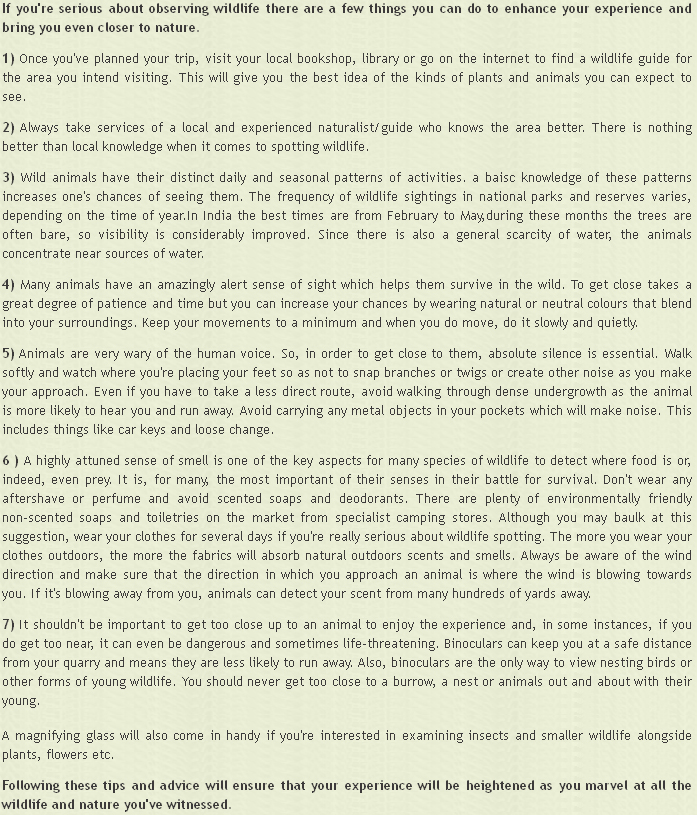
Animal Spotting Tips
Valley of Flowers Tour(Tour Highlight)
| City | Tour Highlight |
| Haridwar | Laxman Jhoola, Ram Jhoola. |
| Joshimath | Garhwal traditional village, Nanda Devi Temple. |
| Valley of Flower | See Shepherds Place, view of Kuari Pass, Trishul & Dronagiri. |
| Hemkund Sahib | View of Nanda Devi Peak, view of Nanda Devi interline Sanctuary, view of snow line peaks. |
| Hitoli Camp Site | Tolma Village, see the forests of Rhododendron, Birch and Fir. |
Get a Call Back from us
Please provide us your contact number and convenient time, our expert will call back to you.


